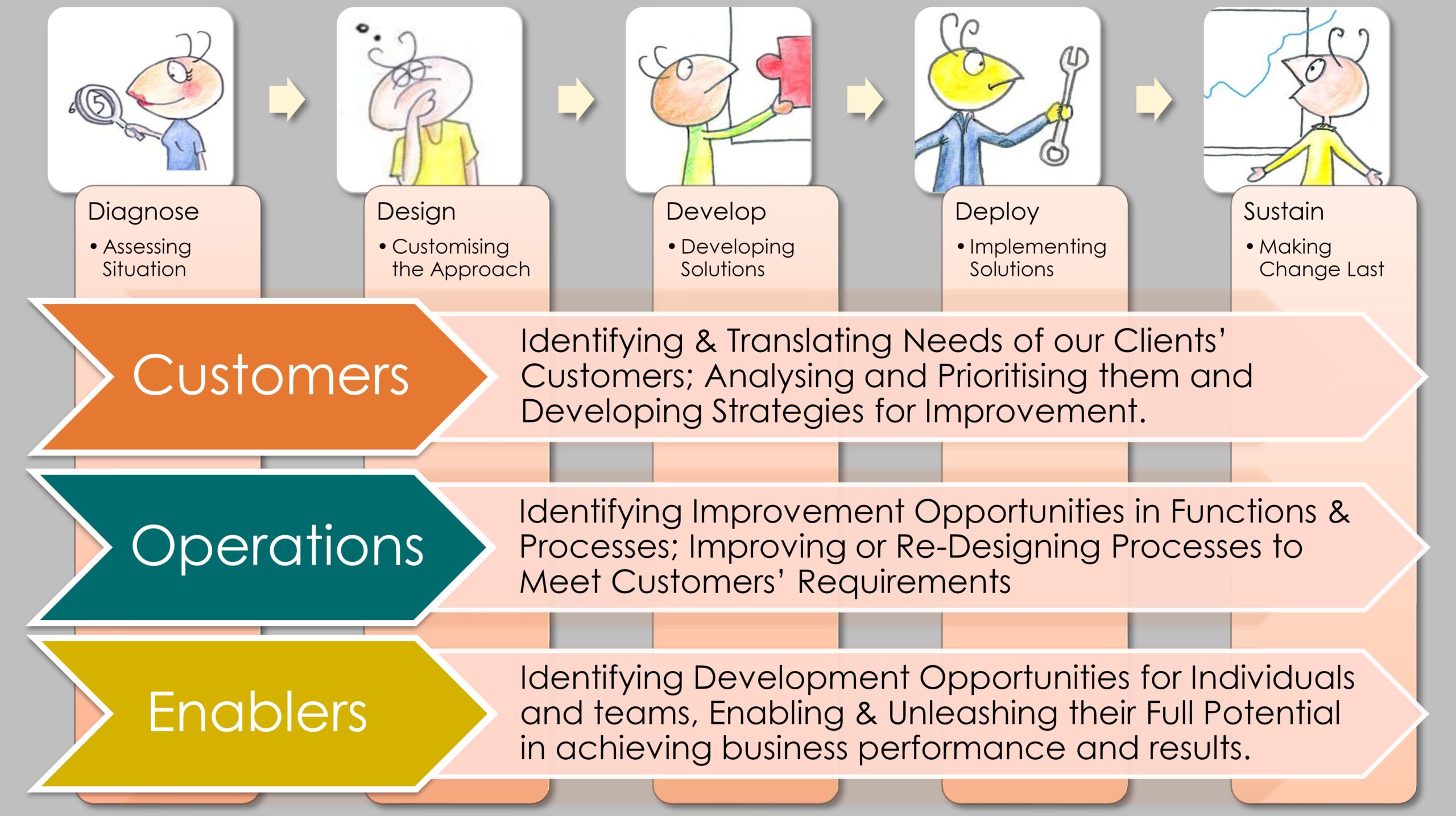
An uncertain labour market coupled with a rapidly changing marketplace creates the need for organisations to proactively plan for expected and unexpected shifts in business demand and talent supply. Furthermore, the business implications of the aging workforce position human capital planning as an essential element of comprehensive business planning. However, many organisations are only beginning to see the value of such planning and may be at a disadvantage in the coming years without building a structured planning process that ties human capital strategies to business goals.
Workforce planning allows organisations to better meet the challenges of a rapidly changing economy. By using business strategy to align shifts in demand with the existing and future supply of human capital, organisations optimise the workforce to meet business goals, increase market share, and improve employee engagement.
This article describes the workforce planning approach and illustrates the strategic alignment of workforce planning.
Prepare Workforce Planning
Workforce planning is a major project for each organisation. A typical challenge teams will face when conducting workforce planning is the lack of buy-in from the leadership team starting with the lack of involvement of HR in strategy planning and hence resulting in a missing link between workforce priorities and business strategy.
Therefore it needs to be prepared carefully. Proper preparation includes:
- Agreeing on the lead for the workforce planning process. To be effective, workforce planning should be led by corporate planning and HR.
- Assembling a team of dedicated members. Workforce planning involves affected functions and finance.
- Gathering all information needed. Workforce planning typically takes place on an annual basis, and is usually done in conjunction with the annual strategy planning process.
Note: Workforce planning usually takes several weeks to complete.
Deploy Workforce Planning
Strategic workforce planning should be done after a thorough workforce analysis. The basis for this workforce analysis is the system of core and support processes run by the workforce.
Workforce analysis without accompanying process analysis could lead to having the right workforce for the wrong process. Therefore, the logical steps for strategic workforce planning are: understanding business priorities, translating them into process priorities and deriving workforce priorities out of both.
To be effective, workforce planning is typically carried out in the following 3 phases.
Phase 1: Understanding Strategic Priorities and Customer Needs
Current strategy and future strategic moves are influenced by external forces like market and competition as well as internal factors like stakeholders and employees . Understanding the business goals for the next few years help define the demand for human capital, such as retirement, turnover and new roles being created.
Additionally, it is necessary to study the status of meeting customer needs (SLAs) and the degree of employee satisfaction, staff turn-over, job acceptance rate and other HR metrics of the existing processes. Moreover, customer requirements change over time. Today’s Delighter is likely to be a Satisfier tomorrow and a Must criteria – a basic requirement – a little later. We cannot assume that the same processes which meet customer requirements this year will be able to do so in the next few years. Therefore, understanding strategic priorities as well as future customer demands and requirements are key fundamentals for Strategic Workforce Planning.
To determine future supply, forecast models based on interviews, focus group results as well as historical trends are helpful.
Phase 2: Projecting Strategy into Process Priorities
Processes are means to execute an organisation’s strategy. Usually, processes have been designed years ago for a slightly different strategy and somewhat diverse customer needs. Processes typically lag behind the strategy. They get only amended when there is a rather pressing need. Therefore, a thorough analysis of core and support processes is recommended in order to identify performance gaps. Indicators for performance gaps are to be found in customer satisfaction data, employee survey results and a list of other measures a company has put in place to manage performance and staff. Value-Analysis is a good method to calculate process efficiency. However, an organisation should not try improving only based on internal measures.
As important it is to develop the strategy based on external data, as important is it for processes to be benchmarked against the “best in class”. Since only some selected areas of an organisation undergo benchmarking at one point in time, functional benchmarking is recommended for industry-specific processes and generic benchmarking for rather industry-independent processes. Benchmarking usually starts with the process outcome to answer the question whether the benchmarking partner is really ahead. Only in this case it makes sense to proceed with process benchmarking. Whilst “results benchmarking” can be done in relatively short time via electronic media, process benchmarking requires a considerable amount of time in face to face meetings whilst going to Gemba.
The outcome of gap analysis as well as benchmarking is a list of opportunities. This list needs to be evaluated and prioritised regarding cost/benefit and risk/impact ratio of these opportunities. Small changes – typical Kaizen activities like taking out an unnecessary step – are normally easy and quick to be implemented. Process improvement activities require some data collection and root cause analysis to enhance performance such as reducing cycle time of a customer application process. Most challenging, sometimes costly, risky and more time consuming are process redesign/reengineering activities that start with a “clean sheet of paper” approach. Performance gap list and benchmarking help gauging what method to choose for opportunities in processes.
Obviously, workforce planning does not need process changes per se. However, deriving workforce and competency needs out of existing processes without checking their appropriateness and performance could be a missed opportunity resulting in improper workforce projection and hence, a waste of time and resources.
Phase 3: Defining Workforce Priorities
Workforce planning needs to be started at a process level by assigning number of staff and competency required for each step. Existing process steps and benchmarking serve as a guideline for deriving workforce needs. Data gathering can be done during open interviews, structured focus group sessions or even through time study on the process. Whereas manufacturing processes are highly structured, regulated and enforced by machines, service processes are typically less stringent resulting in somehow more variation in processing time for certain process steps. Time studies are necessary for processes with rather large variation. A robust set of processing time data is a key necessity for the integrity of the overall result. Moreover, even if customer demand changes in future and processes get amended, the smallest unit, the process step changes at the least degree. Hence, this information will be useful for future planning activities, too.
After having collected all workforce needs for existing processes, workforce gap analysis (Figure 3) as well as workforce projection can be performed. Using software to build the process-workforce-database supports future workforce planning activities. The output of a workforce plan will be translated into a workforce strategy, which in turn defines HR strategy and HR plan.
Strategic workforce planning is a highly sensitive activity and therefore needs to be supported by a solid change management approach starting with a well communicated need.
Conclusion
By using business strategy to align shifts in demand with the existing and future supply of human capital, organisations optimise the workforce to meet business goals, increase market share, and improve employee engagement. Workforce planning allows organisations to better meet the challenges of a rapidly changing economy.
Print EN Print VN
Published