COE-Partners - Rotating Header Image

Posts under ‘Lean Six Sigma’

Lean Six Sigma and Innovation

Over the last decade, companies and organisations in nearly every industry all over the world have introduced Lean Six Sigma to increase customer satisfaction and to deliver impressive results. An outstanding example is General Electric, the company who has made Six Sigma as popular as it is today.

Another term that has drawn tremendous attention in the business world is Innovation. On the one hand, Lean Six Sigma works towards very low variation in processes with high efficiency. Innovation, on the other hand, seeks to find undiscovered, uncertain territory. Such efforts are rather inefficient. Innovation requires risk-taking, making mistakes and learning from failures.

Can a corporate culture be developed on both key thinking patterns in order to get the best out of Lean Six Sigma Efficiency and Innovative Solutions? Continue reading →

Protected: Asia Regional Programme in Advancing Quality and Productivity Improvement, Jan 2013

This post is password protected. To view it please enter your password below:

Demystifying Lean Six Sigma

MYTH: LEAN SIX SIGMA IS THE LEAN, THE SLIM VERSION OF SIX SIGMA.

The truth is: Lean Six Sigma is the advanced version of Six Sigma. It combines two powerful toolboxes, Lean and Six Sigma.

Lean has been developed by Toyota starting after WWII under the name of Toyota Production System which has been contributing as a major factor to Toyota’s world-wide success in making the most reliable cars available for an affordable price.

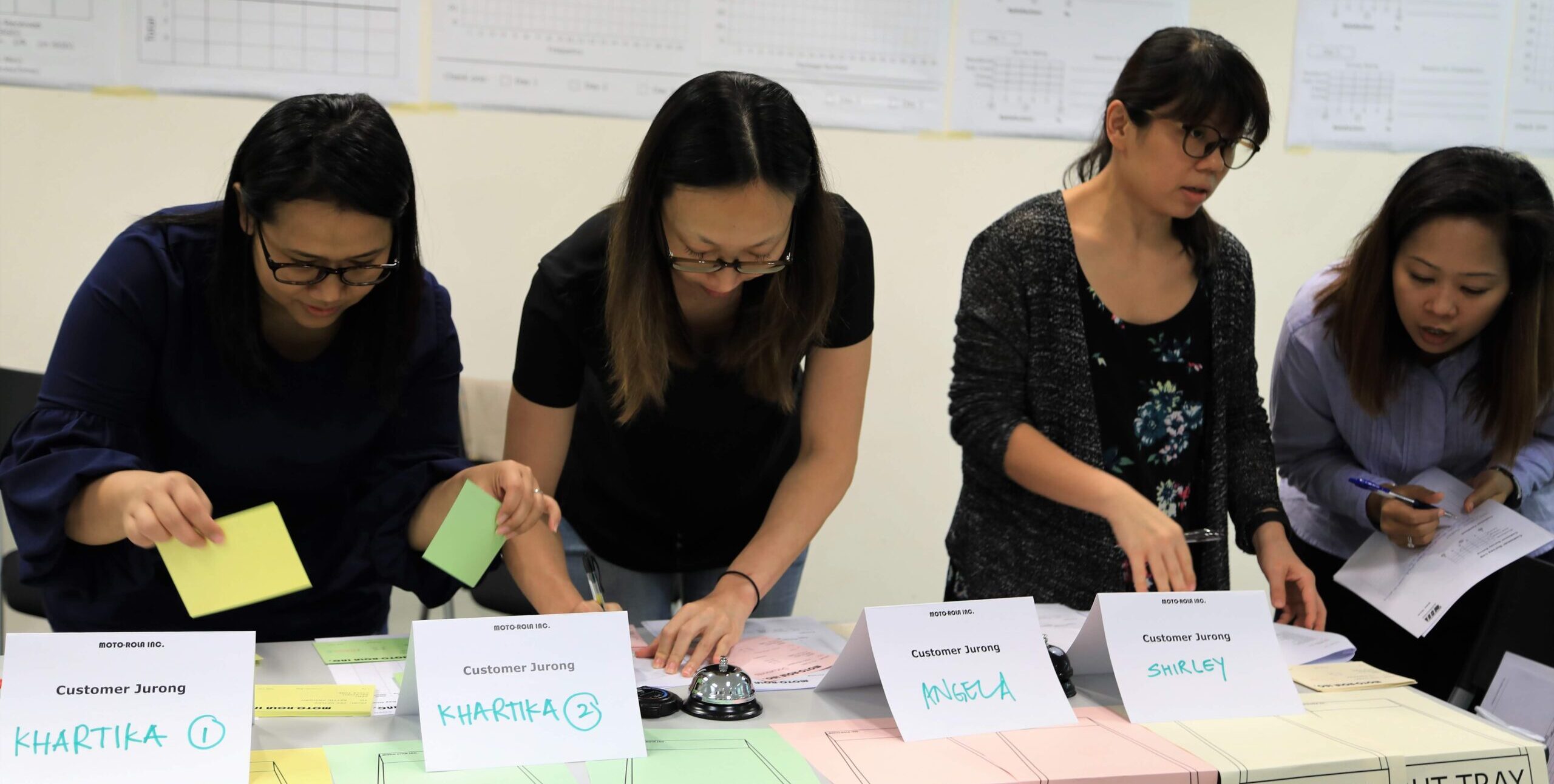
Six Sigma was a major means during and the result of Motorola’s successful fight for survival in their bleeding TV business during the mid-eighties.

Whereas Lean focusses on waste reduction in all kind of processes by cutting out unnecessary activities, Six Sigma helps to reduce variation and increase predictability in the steps that are really necessary. Continue reading →

Seven Habits … – Habit 3: Drive Continuous Improvement

Habit 3: Drive Continuous Improvement and Innovation

Working with management teams of our clients often takes them away from their business for a few days. They frequently get in touch with their teams at home. Sometimes I involuntarily eavesdrop their part of the conversation. “How is it going? Is everything ok?” is a very common question they ask their teams. When they get some kind of “yes” they feel much better.

My old professor at the university, we called him Ho, had the habit of having tea with the whole team of his assistants in the morning whenever he was around. I cannot say that these sessions were my favourite pastime. Yet, I have to say that these sessions had been a great learning experience. Ho would never ask a question like “Is everything ok?” Instead, his preferred question was “What are your issues? What is new?” Continue reading →

Seven Habits … – Habit 4: Focus on the Process

Habit 4: Focus on Processes – Rather Than People

When was the last time you reprimanded someone for a job not done perfectly. I guess you can remember easily. And, when did you tell someone that she did an excellent job? If you have issues answering the second question whereas the first one comes to you easily, I suggest you go on reading. Continue reading →

Excuse Me, Why Should HR Know About Six Sigma?

A friend recently spoke at an HR Conference on a competency development roadmap for Six Sigma professionals. During the break, a few participants went up to him and asked him what Six Sigma is. Only then it occurred to him that not every HR person is familiar with well known basic principles and management practices contributing to business performance and leadership development.
Given today’s need for HR professionals to be Strategic Business Partners, to be a ‘Voice of Conscience’ to the CEOs as well as Champion for the Employees, those with background in proven management methodologies and tools such as Lean, Six Sigma or Kaizen have a great advantage. An HR Professional who can present his business case for HR strategies and interventions with a compelling return on investment will be respected and regarded. Having the knowledge and exposure in cost and time estimates, in analytical thinking processes as well as fact-based strategies and decision making will open doors.
Continue reading →

Six Sigma In The Bloodstream

One day I was asked why I left the stable, “money-printing” ISO 9000 business to join the riskier Six Sigma environment. My explanation went something like this: “Well, I think it makes more sense to implement a real business improvement and management system than to hang a nice certificate in the CEO’s office.”

But is this statement really true? Does starting a Six Sigma initiative automatically mean you’ll have an effective Quality management system? Definitely not. The downside of Six Sigma is that there are currently no “standards”, nor an “official” certifying institution, to make sure that everyone walks the talk.

Six Sigma is more than starting a few projects, training some Belts and educating some business leaders about what it all means. The Six Sigma criteria depend on the business implementing this approach. Continue reading →

Eight Workable Strategies for Creating Lean Government

Lean government. The very idea sounds implausible. Even to the seasoned Lean practitioner, the idea of a Lean government sounds far-fetched. Governments are traditionally seen as the epitome of bureaucracy, and the guardians of red tape, incomprehensible forms and endless queues. But there are workable Lean strategies for governments seeking to reduce waste and become more efficient. Eight are outlined here. Perhaps considering the eight ideas can spur government change agents to study Lean literature for potential improvement applications and in the longer run, start a Lean revolution in governments.
Continue reading →

Anatomy of Success in Lean Application for the Service Sector

Lean application outside of the manufacturing sector is frequently met with scepticism. Oft cited reasons are that service providers do not ‘manufacture’ anything and that there is no ‘production line’ to speak of physically. All that is seen are desks, chairs, phones and computers. Continue reading →

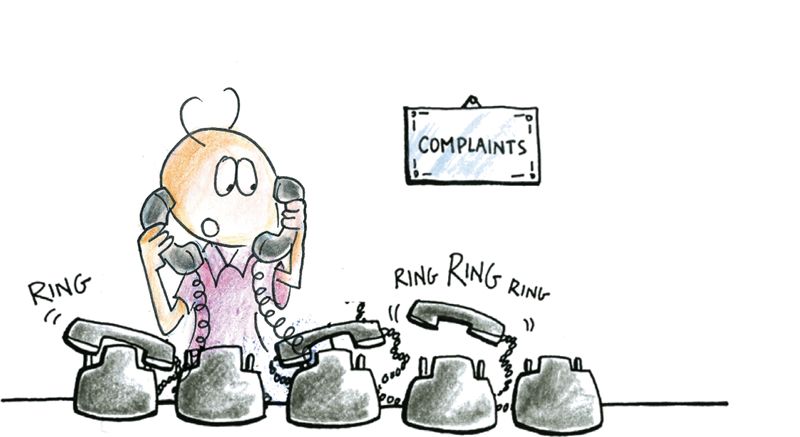
Complaints – The Tip of the Iceberg

“Voice of the Customer” – VOC in short – is a key topic in all kind of customer service, TQM or Six Sigma training and related project work. There are two main categories for VOC data, reactive and proactive. Proactive data is collected with methods like focus groups, interviews, observations, surveys or test customers, whereas reactive data is mainly based on customer complaints, feedback, hotline data or warranty claims. The nature of the human being restricts itself almost always to negative comments through reactive data channels.  Continue reading →