COE-Partners - Rotating Header Image

Posts under ‘Customers’

Lean Six Sigma and Innovation

Over the last decade, companies and organisations in nearly every industry all over the world have introduced Lean Six Sigma to increase customer satisfaction and to deliver impressive results. An outstanding example is General Electric, the company who has made Six Sigma as popular as it is today.

Another term that has drawn tremendous attention in the business world is Innovation. On the one hand, Lean Six Sigma works towards very low variation in processes with high efficiency. Innovation, on the other hand, seeks to find undiscovered, uncertain territory. Such efforts are rather inefficient. Innovation requires risk-taking, making mistakes and learning from failures.

Can a corporate culture be developed on both key thinking patterns in order to get the best out of Lean Six Sigma Efficiency and Innovative Solutions? Continue reading →

Protected: Asia Regional Programme in Advancing Quality and Productivity Improvement, Jan 2013

This post is password protected. To view it please enter your password below:

Workforce Planning Strategically Aligns Human Capital with Business Direction

An uncertain labour market coupled with a rapidly changing marketplace creates the need for organisations to proactively plan for expected and unexpected shifts in business demand and talent supply. Furthermore, the business implications of the aging workforce position human capital planning as an essential element of comprehensive business planning. However, many organisations are only beginning to see the value of such planning and may be at a disadvantage in the coming years without building a structured planning process that ties human capital strategies to business goals.
Workforce planning allows organisations to better meet the challenges of a rapidly changing economy. By using business strategy to align shifts in demand with the existing and future supply of human capital, organisations optimise the workforce to meet business goals, increase market share, and improve employee engagement.
Continue reading →

Seven Habits … – Habit 3: Drive Continuous Improvement

Habit 3: Drive Continuous Improvement and Innovation

Working with management teams of our clients often takes them away from their business for a few days. They frequently get in touch with their teams at home. Sometimes I involuntarily eavesdrop their part of the conversation. “How is it going? Is everything ok?” is a very common question they ask their teams. When they get some kind of “yes” they feel much better.

My old professor at the university, we called him Ho, had the habit of having tea with the whole team of his assistants in the morning whenever he was around. I cannot say that these sessions were my favourite pastime. Yet, I have to say that these sessions had been a great learning experience. Ho would never ask a question like “Is everything ok?” Instead, his preferred question was “What are your issues? What is new?” Continue reading →

Complaints – The Tip of the Iceberg

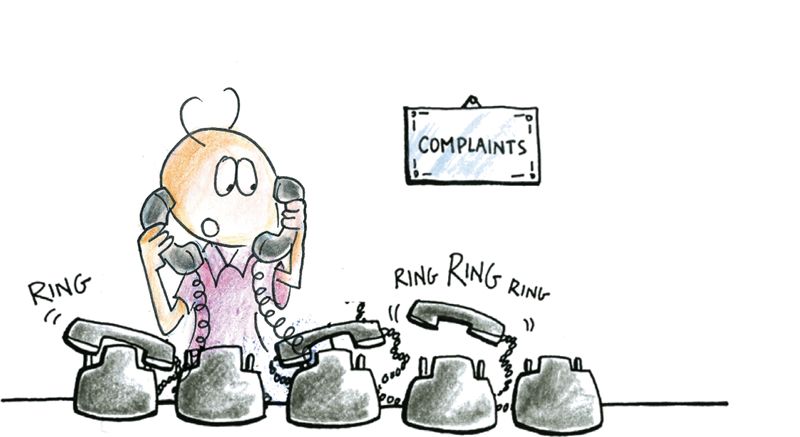
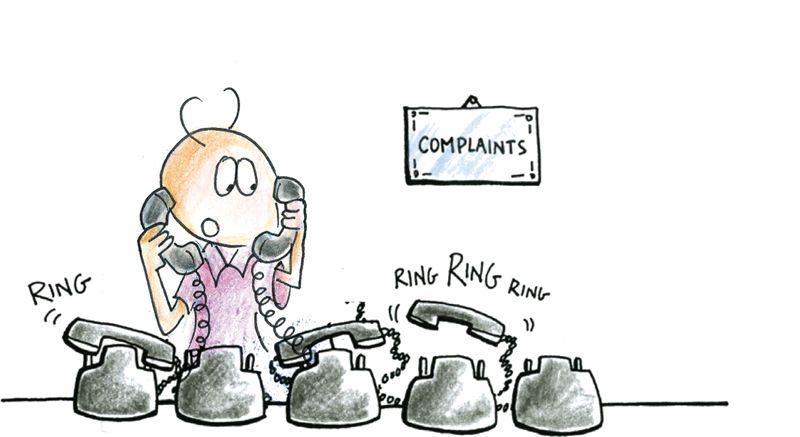
“Voice of the Customer” – VOC in short – is a key topic in all kind of customer service, TQM or Six Sigma training and related project work. There are two main categories for VOC data, reactive and proactive. Proactive data is collected with methods like focus groups, interviews, observations, surveys or test customers, whereas reactive data is mainly based on customer complaints, feedback, hotline data or warranty claims. The nature of the human being restricts itself almost always to negative comments through reactive data channels.  Continue reading →

Seven Habits … – Habit 2: Moment of Truth

Habit 2: Believe in the Moment of Truth

The Moment of Truth is the short timeframe when a customer experiences the product or service that many people have prepared often over many months. It is the moment when a small, often unintentional mishap has the huge potential to spoil the result of hard work by others in the organisation behind the scenes. Good process managers know this and put their focus on the Moment of Truth.

When Jack Welch explained his view on management he used to draw a company structure against the common understanding upside down. His explanation went somehow like that: Continue reading →

What You Measure is What You Get

Developing a compelling vision and mission statement as well as a sound strategy is vital for any organisation. Equally important is the translation of the strategy into the day-to-day business. This step becomes even more critical for multi-national companies with their need for regional adaptation and alignment with corporate at the same time. So, how do we make sure our mid- and long-term plans – developed in the head quarter – make sense to business leaders and employees in other regions? Continue reading →

Seven Habits … – Habit 1: VOC

Habit 1: Know Your Customers and Their Voice

‘Ting’ is a sophisticated traditional Chinese character (Figure 1) that exemplifies the most important activity related to customer service in an impressive way: Listening. The old Chinese already knew that when listening with your ears you better treat the speaker as a king, focus wholeheartedly with 100% attention.

Only by doing so you learn about your customers’ requirements, the mentioned ones and – often more important – the unsaid. Continue reading →

Contextual Thinking – The Key to Success in Communicating Innovative Proposals?

You may have heard and read much in the last few years regarding creativity and innovation. Or you may even have attended a creativity workshop that you found interesting and fun that has helped you come up with some new ideas. Now your current employer may be requiring innovative input. However, you find that your suggestions are mostly ignored or frowned upon. This is mainly because nobody has told you the „The Secret”. Continue reading →

Balancing Customer Satisfaction and Productivity

Your staff members complain about having too much work, the proportion of people on short-term sick-leave is consistently above average and the turnover rate is disturbingly high. Do these symptoms indicate that you need to increase your staffing? However, the average number of daily transactions processed shows that your staff should be able to easily handle the volume. So, what is the problem? Continue reading →